A healthy smile starts with good oral hygiene, and routine dental cleanings play an important role in maintaining healthy teeth and gums. Even if you brush twice a day and floss regularly, plaque and tartar can still build up in areas that are difficult to reach at home.
A professional dental cleaning helps remove this buildup, prevent gum disease, and keep your smile looking and feeling its best. If you have never had a professional cleaning or feel nervous about your next appointment, understanding what happens during the procedure can help you feel more comfortable.
In this guide, we will explain each step of a routine dental cleaning, how long it takes, whether it hurts, and how to care for your teeth afterward.
What Is a Routine Dental Cleaning?
A routine dental cleaning, also known as prophylaxis, is a preventive dental procedure performed by a dentist or dental hygienist to remove plaque, tartar, and surface stains from your teeth.
Plaque is a sticky film of bacteria that forms on teeth throughout the day. When plaque is not removed effectively, it can harden into tartar, which cannot be eliminated through regular brushing and flossing alone.
Professional cleanings help reduce the risk of cavities, gingivitis, and other oral health problems. They also give your dental professional an opportunity to check for early signs of potential issues.
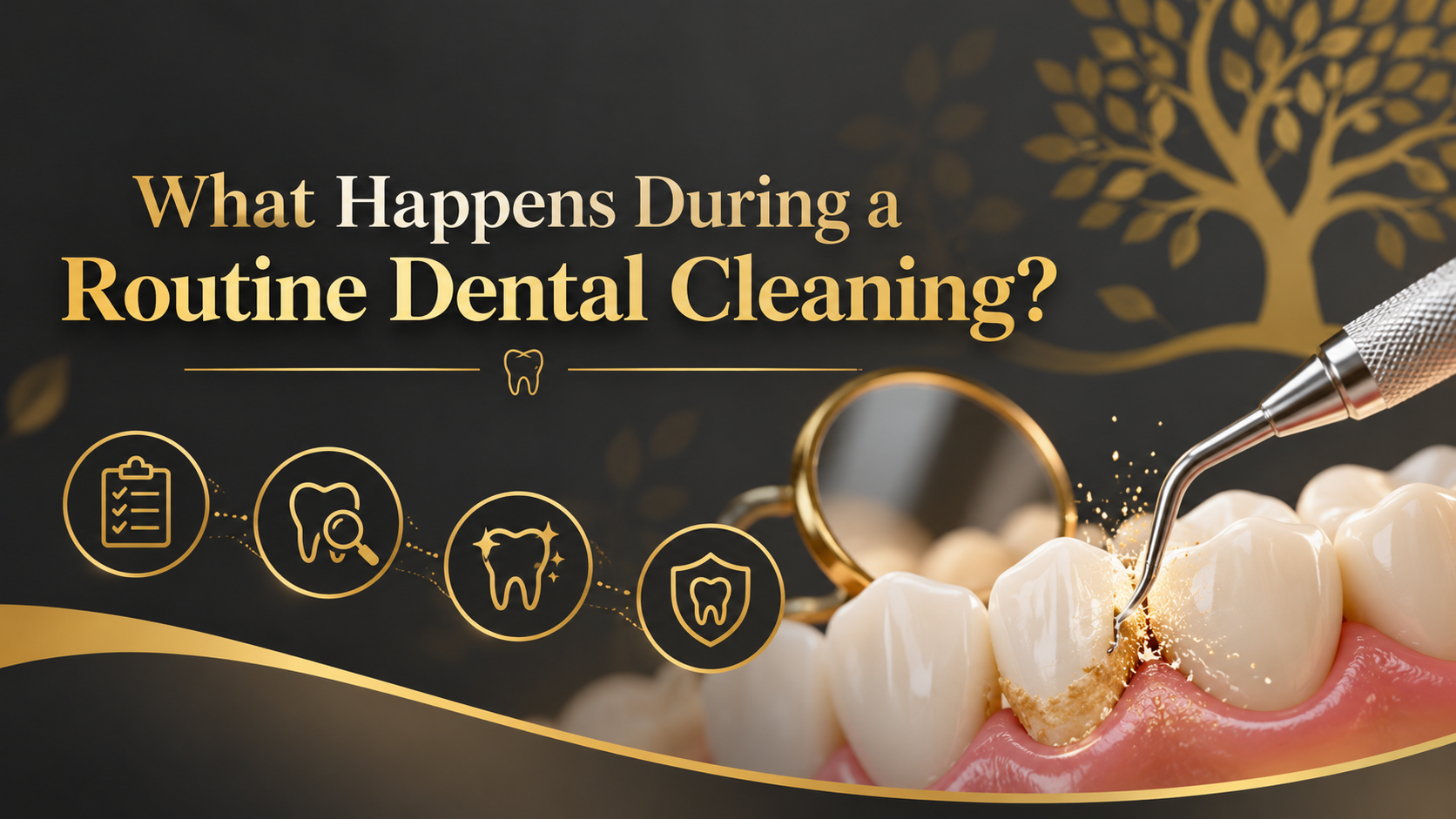
Step-by-Step: What Happens During a Routine Dental Cleaning?
A routine dental cleaning usually involves several steps. Although the exact process may vary depending on your oral health, most appointments follow a similar sequence.
1. Reviewing Your Dental and Medical History
Before the cleaning begins, your dental professional may ask about your medical history, medications, allergies, and any oral health concerns.
You may be asked whether you have experienced bleeding gums, tooth sensitivity, bad breath, or discomfort while chewing. Sharing this information helps your dental team tailor the cleaning to your needs.
If you have existing dental restorations, gum problems, or other oral health conditions, your dentist may recommend additional assessments or a different cleaning approach.
2. Examining Your Teeth and Gums
The next step is a preliminary examination of your teeth, gums, and surrounding oral tissues.
Your dentist or hygienist may use a small mirror and dental instruments to look for:
Plaque and tartar buildup.
Red, swollen, or bleeding gums.
Early signs of tooth decay.
Gum recession or periodontal concerns.
Visible damage to existing fillings or crowns.
Depending on your dental history and symptoms, your dentist may also recommend dental X-rays. However, X-rays are not automatically required at every cleaning appointment.
This examination helps identify problems that may need attention before they become more serious.
3. Removing Plaque and Tartar
One of the most important parts of a dental cleaning is removing hardened deposits from the teeth.
Your dental professional may use a manual scaler, an ultrasonic instrument, or a combination of both. Ultrasonic instruments use vibrations and water to help loosen deposits, while manual instruments allow for precise cleaning around the teeth and gumline.
You may hear scraping or buzzing sounds during this step. These sounds are normal, and you may feel some pressure or mild vibration.
Removing tartar is essential because it provides a surface where additional plaque can accumulate and irritate the gums.
Important: Brushing and flossing help control plaque, but they cannot remove hardened tartar once it has formed.
4. Polishing the Teeth
After plaque and tartar removal, your dental professional may polish your teeth using a rotating rubber cup or brush and a special polishing paste.
Polishing helps remove certain surface stains caused by coffee, tea, tobacco, and other staining substances. It also leaves your teeth feeling smoother and cleaner.
However, routine polishing does not change the natural colour of your teeth in the same way that professional whitening treatments do.
Your dental professional may adjust the polishing method depending on your oral health, tooth sensitivity, and existing dental restorations.
5. Professional Flossing
Your dental hygienist may floss between your teeth to remove remaining debris and check the spaces between them.
This step also helps identify areas where plaque tends to accumulate, particularly between tightly spaced teeth or around dental restorations.
You may notice a little bleeding if your gums are inflamed. Occasional bleeding can occur, especially when gum disease is present, but frequent bleeding should not be ignored.
Regular flossing at home helps keep these areas clean between professional appointments.
6. Fluoride Treatment, If Recommended
Some dental cleanings include a fluoride treatment, particularly for patients who have an increased risk of tooth decay.
Fluoride helps strengthen tooth enamel and makes teeth more resistant to acid attacks caused by bacteria and sugars.
Depending on your needs, the dental professional may apply fluoride varnish, gel, or another suitable product.
Fluoride treatment is not necessarily required for every adult or every cleaning visit. Your dentist can recommend it based on your cavity risk, age, and oral health history.
7. Discussing Your Oral Health and Next Steps
Once the cleaning is complete, your dental professional may discuss the findings and offer personalised advice.
You might receive recommendations about brushing technique, flossing, fluoride toothpaste, dietary habits, or products for sensitive teeth.
If your dentist notices signs of gum disease, cavities, or other concerns, they may suggest further evaluation or treatment.
You will also receive guidance about when to schedule your next cleaning. Many people benefit from professional cleanings every six months, but the ideal interval depends on individual risk factors and gum health.
How Long Does a Routine Dental Cleaning Take?
A routine dental cleaning typically takes around 30 to 60 minutes. The duration depends on the amount of plaque and tartar present, your oral health, and whether an examination or other preventive services are included.
Patients with healthy gums and minimal buildup may need less time. Those with significant deposits, sensitive teeth, or additional dental concerns may require a longer appointment.
If you have advanced gum disease, you may need a more specialised procedure called scaling and root planing rather than a standard preventive cleaning.
Does a Dental Cleaning Hurt?
For most people, a routine dental cleaning is comfortable and causes little to no pain.
However, you may experience mild discomfort if you have sensitive teeth, inflamed gums, gum recession, or substantial tartar buildup.
You might notice:
Mild pressure during tartar removal.
Temporary sensitivity to cold water.
Slight gum tenderness.
Minor bleeding if your gums are inflamed.
If you experience discomfort, let your dental professional know. They can adjust the technique, take breaks, or discuss ways to improve your comfort.
People who have significant dental anxiety should also mention it before the appointment so the dental team can help them feel more relaxed.
What Should You Do Before a Dental Cleaning?
Preparing for a routine dental cleaning is simple.
Brush your teeth and floss as you normally would.
Eat beforehand if you prefer, especially if you may feel hungry afterward.
Bring an updated list of medications and relevant medical information.
Inform your dentist about tooth sensitivity, bleeding gums, or dental anxiety.
Continue taking prescribed medications unless your healthcare professional advises otherwise.
There is generally no need to fast before a routine cleaning.
What Should You Do After a Dental Cleaning?
After your appointment, maintaining good oral hygiene helps preserve the benefits of professional cleaning.
Here are a few helpful tips:
Brush twice daily: Use a soft-bristled toothbrush and fluoride toothpaste.
Floss daily: Clean between your teeth to remove plaque that your toothbrush cannot reach.
Drink water regularly: Water helps rinse away food particles and supports a healthy oral environment.
Limit frequent sugary snacks: Repeated exposure to sugar increases the risk of tooth decay.
Pay attention to sensitivity: Mild sensitivity may occur temporarily after cleaning. If discomfort is severe, persistent, or worsening, contact your dentist.
If you received fluoride varnish or another additional treatment, follow the specific aftercare instructions provided by your dental professional.
How Often Should You Get a Dental Cleaning?
Many people schedule a routine dental cleaning every six months. However, this is not a universal rule.
Your dentist may recommend more frequent visits if you have:
A history of gum disease.
Significant plaque or tartar buildup.
A higher risk of tooth decay.
Certain medical conditions that affect oral health.
Difficulty maintaining effective oral hygiene at home.
Some patients may need visits every three to four months, while others may be suitable for longer intervals based on their individual risk.
Following a personalised preventive care schedule can help maintain healthier teeth and gums over time.
Routine Dental Cleaning vs. Deep Cleaning
Although the terms are sometimes used interchangeably, routine cleaning and deep cleaning are different procedures.
A routine cleaning primarily removes plaque, tartar, and stains from the visible tooth surfaces and around the gumline.
A deep cleaning, clinically known as scaling and root planing, is a periodontal treatment used when gum disease has caused deeper pockets around the teeth. It removes deposits from below the gumline and smooths the root surfaces to help the gums heal.
Deep cleaning may involve local anaesthesia and multiple appointments. It is not necessary for everyone and is recommended when clinically indicated.
Benefits of Regular Dental Cleanings
Regular professional cleanings offer several important benefits:
Help prevent gum disease: Removing plaque and tartar reduces factors that contribute to gum inflammation.
Lower the risk of cavities: Professional preventive care helps identify risk factors and support effective home hygiene.
Reduce some surface stains: Polishing can improve the appearance of stained tooth surfaces.
Support fresher breath: Removing plaque and trapped debris may help reduce certain causes of bad breath.
Identify problems early: Regular dental examinations can reveal issues that may require treatment.
Support long-term oral health: Consistent preventive care helps you maintain a healthy smile.
Professional cleaning works best when combined with daily brushing, flossing, and regular dental checkups.
Frequently Asked Questions
1. Can I eat immediately after a dental cleaning?
In most cases, yes. If you have not received a treatment that requires special aftercare, you can generally eat as soon as you feel comfortable. Follow your dentist's instructions if fluoride varnish or another additional treatment was applied.
2. Can dental cleaning damage my teeth?
When performed appropriately by a trained dental professional, routine cleaning is considered safe. It removes plaque and tartar without damaging healthy tooth structure. Temporary sensitivity can occur, but persistent discomfort should be evaluated.
3. Why do my teeth feel different after cleaning?
Your teeth may feel smoother because hardened deposits and surface plaque have been removed. If tartar had accumulated between your teeth, you may also notice spaces that were previously filled by deposits.
4. Is dental cleaning necessary if I brush twice daily?
Yes. Brushing and flossing are essential, but they may not remove all plaque, and they cannot remove hardened tartar. Professional cleanings help address these areas and allow your dentist to assess your oral health.
5. Can I get my teeth cleaned if my gums bleed?
Bleeding gums do not automatically mean you cannot have a cleaning. In fact, professional cleaning may be part of managing gum inflammation. Inform your dentist about the bleeding so they can evaluate the cause and choose the appropriate treatment.
6. Will dental cleaning make my teeth whiter?
A cleaning can remove some external stains and restore your teeth's natural appearance. However, it is not a substitute for professional teeth whitening if you want to change the underlying shade of your teeth.
Conclusion
A routine dental cleaning is a straightforward and valuable part of preventive oral healthcare. From examining your teeth and removing tartar to polishing surfaces and providing personalised advice, each step helps protect your smile.
Although the procedure may cause mild sensitivity for some people, most routine cleanings are comfortable and require little recovery time.
By combining regular professional cleanings with brushing twice daily, daily flossing, and healthy dietary habits, you can reduce your risk of common dental problems and maintain healthier teeth and gums.
Ready for a healthier smile? Schedule a dental checkup with your dentist to determine which preventive care routine is right for you.
Disclaimer: This article is intended for general educational purposes and should not replace professional dental advice, diagnosis, or treatment.